
Walking, running & hiking · With your dog
Outdoors with
your dog.
Together.
Move, get some fresh air, discover a path. What if a walk became a moment to share, for you, for your dog and with other people?
Make time to get outsideIn this article
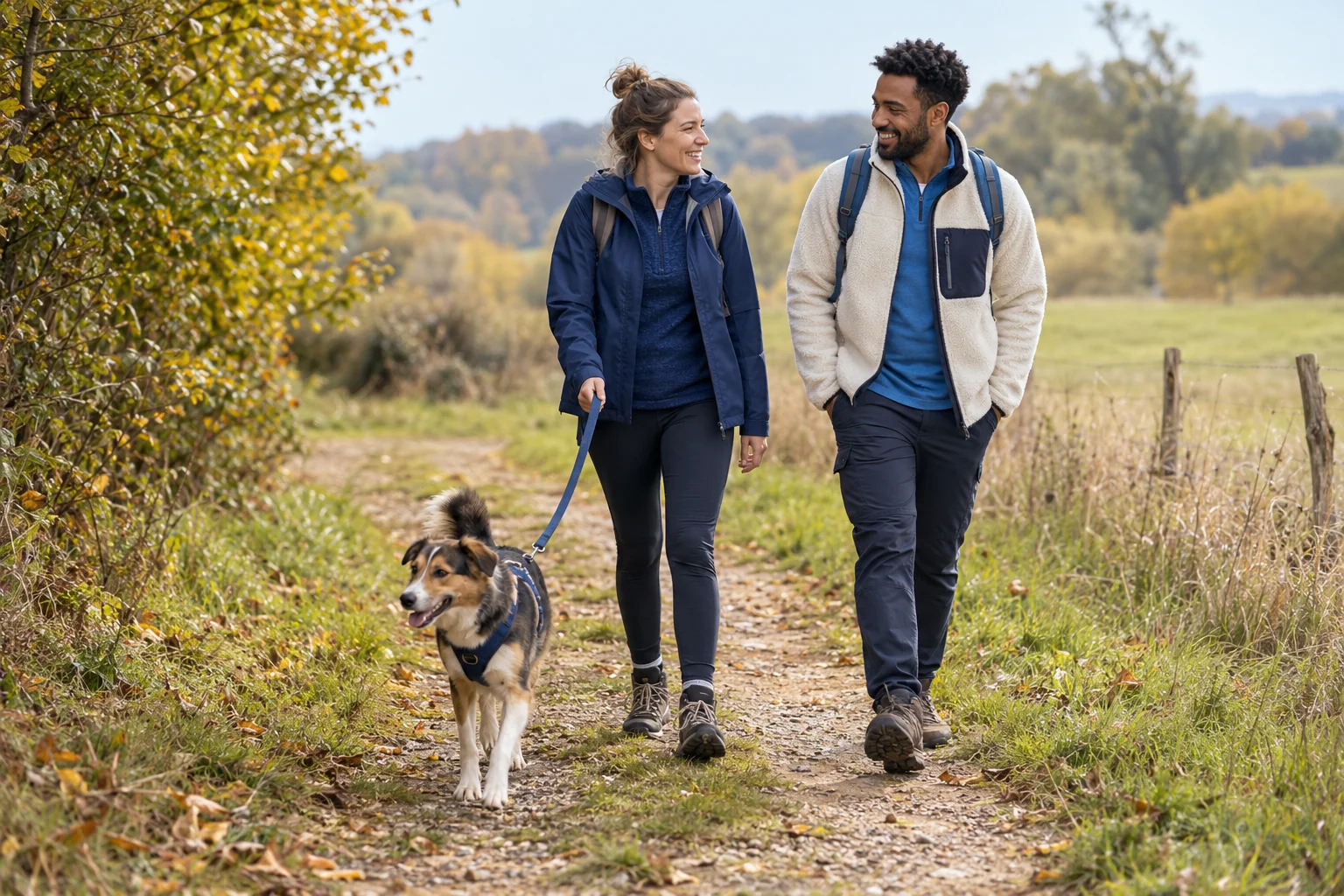
Take your time.
An idea to take with you
An outing that suits everyone.
You do not need to run fast or go far. A good pace respects the people, dogs and place. You can move, leave time to explore and share a moment with others.
Find your way to get outsideTwo useful reference points
Reference points.
Not a stopwatch.
of French people have a dog, according to the FACCO–Odoxa 2024–2025 survey.
The figure and its sourceThe WHO guideline for moderate-intensity activity.
Read the recommendations This guideline is for adults. It does not set the length of your dog's walk.A lead, a pair of shoes and a wish to get some fresh air.
You may know every bend of your usual walk. Yet a different path, a pause or someone to talk to can change the experience. Going out with your dog can start with that small change: making time for something you already do.
A gentle walk, a hike or a run: there are several ways to share this time. The aim is not to turn every walk into training, but to find an outing everyone can enjoy.
A reason to get outside.
A habit that feels good.
When most of the day is spent sitting, a walk can make room for movement. You close the door, start walking and change your surroundings. It can become a regular appointment rather than something put off until later.
The benefits come from regular, suitable physical activity: France's Assurance Maladie explains its effects on well-being, sleep and physical health. A dog can be a reason to go out; its presence alone does not guarantee these benefits.
For adults, the WHO recommends 150 to 300 minutes of moderate-intensity activity per week, or an equivalent amount of vigorous activity. Everyday activities count too. Even a limited amount of movement helps: you can start gradually, according to your abilities.
Your dog's world is discovered
with the nose, too.
For your dog, going out is not just about moving or going to the toilet. Smells and exploring the surroundings are part of the experience. In its guide to dogs' needs, Centrale Canine highlights the importance of mental stimulation and sniffing, alongside physical activity.
A pause to explore can therefore belong in the walk. You can vary the route and leave time where conditions allow. Running further is not the only way to make an outing interesting.
Needs vary with each dog's age, health and habits. One may enjoy a calm walk; another may be prepared for more demanding activity. Before starting running or unfamiliar effort, ask your vet what suits your dog.
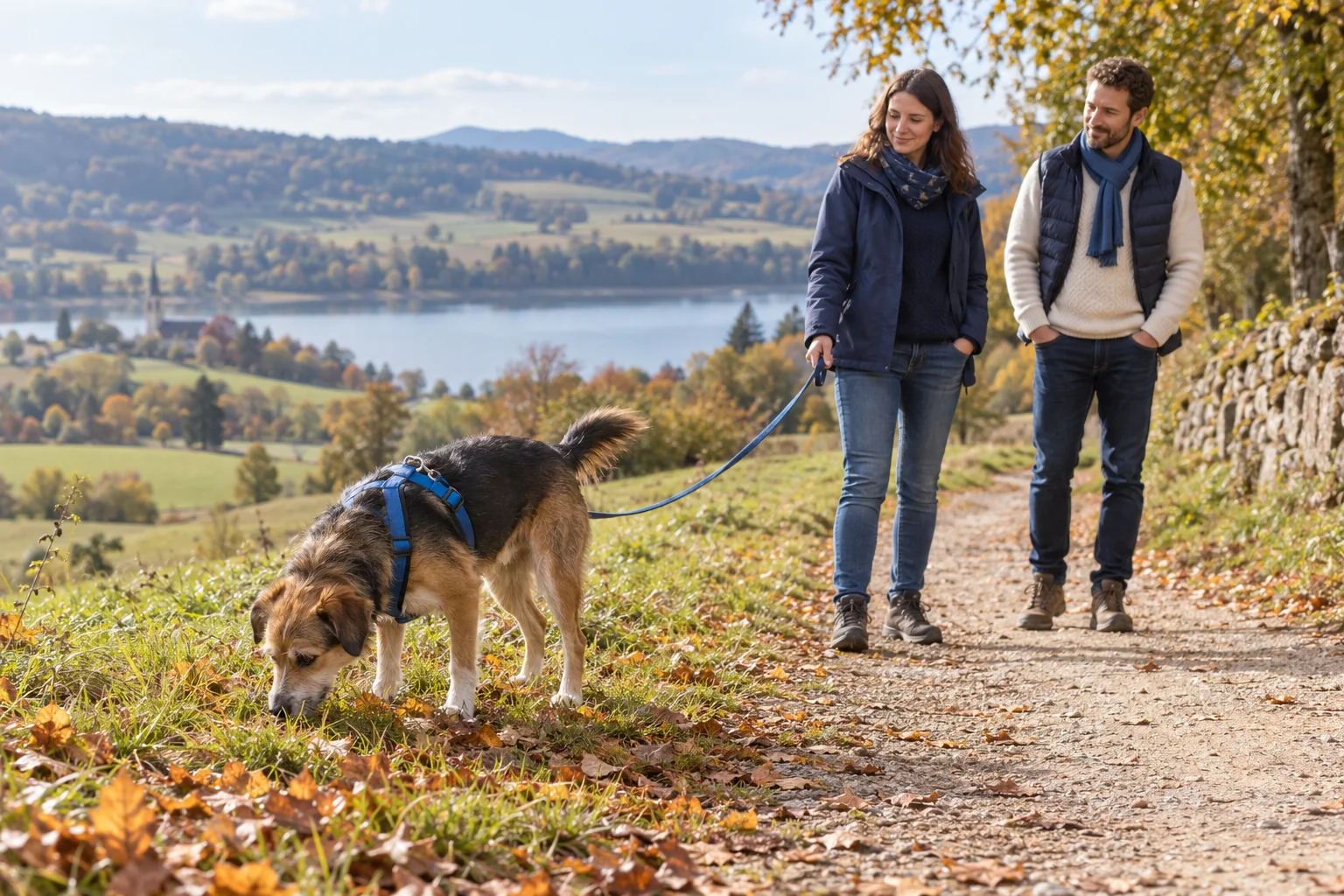
Your time outside.Taking time to explore is part of the outing, too.
Walking, hiking, running.
Choose what suits you both.
Start with everyone's wishes and abilities. Length alone does not describe the effort: hills, terrain and the day's conditions matter too. These examples offer direction, not a universal programme.
| The wish | What you share | What to bring |
|---|---|---|
| Walking | Fresh air, exploring and conversation without rushing. | A suitable path, breaks and the option to cut it short. |
| Hiking | Discover scenery and spend more time outdoors. | Terrain, elevation gain, water, weather and permission for dogs. |
| Running | Share suitable effort and build up gradually. | Your dog's fitness, equipment, conditions and cooling down. |
What about canicross? It connects the person and dog with a shock-absorbing line and specialist equipment. A run where a dog accompanies its owner is not automatically canicross. To learn about pulling and the equipment, see the FFSLC introduction or a club. The federation also reminds us that a dog must never be forced to keep going.
A shared path.
A conversation begins.
An outing can make meeting someone feel simple: walk in the same direction, exchange a few words and share a pause. France's Assurance Maladie also highlights the social side of group activities.
A dog can become a topic of conversation, but people without dogs belong too. You can enjoy the walk, discover a route or meet the group without bringing an animal.
Walking together does not mean all the dogs need to meet at close quarters. Leave space and discuss everyone's needs before setting off. A group outing does not guarantee dogs will get along and is not behavioural therapy.
Prepare simply.
Enjoy it fully.
- Pace
- Choose suitable effort and keep the option to slow down, pause or return early.
- Water and conditions
- Bring water for both of you. In very hot weather, limit exertion and favour cooler hours; watch out for burning ground. Advice from a Centrale Canine vet.
- The route
- Check dog access and lead rules along the whole route. In Vanoise, for example, pet dogs are prohibited in the park's core area; elsewhere, rules vary. The National Park guide.
- The group
- Mention that your dog is coming, read the guidance and discuss space needs. Respect other users and leave wildlife undisturbed.
If your dog slows unusually, seems distressed or does not want to continue, stop the effort. If in doubt about its health, contact a vet. The aim remains an enjoyable outing, not completing a distance at all costs.
With or without a dog,
the joy is still in going out together.
What if your next outing were shared?
With your dog.
With other people.
Foulevo is preparing an addition to walking, running, hiking and trail sessions: find an outing that welcomes your dog or suggest time together centred on your companions.
The right outing.
With your dog.
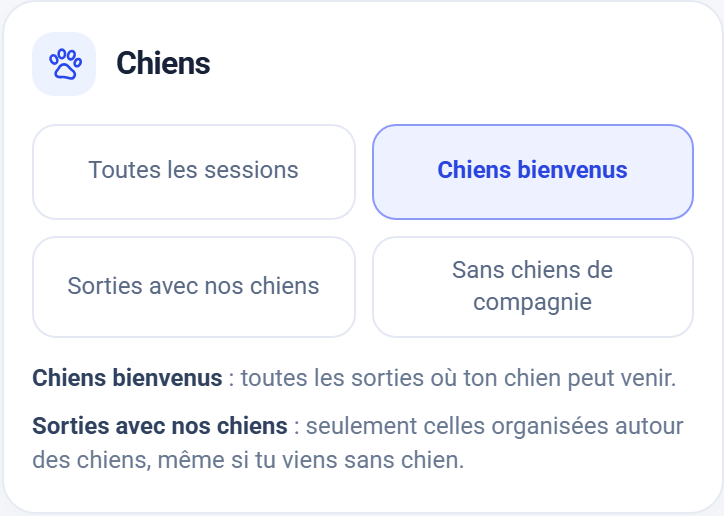
“Dogs welcome” includes sessions where your dog can join. “Outings with our dogs” shows those organised around them; you can join without a dog too.
These options are in the Discover filters. When suggesting an outing, “Welcoming dogs” lets you specify the welcome and guidance.
The group's agreement does not replace local rules. If dog access is not specified, ask the organiser.Who is coming
with you?
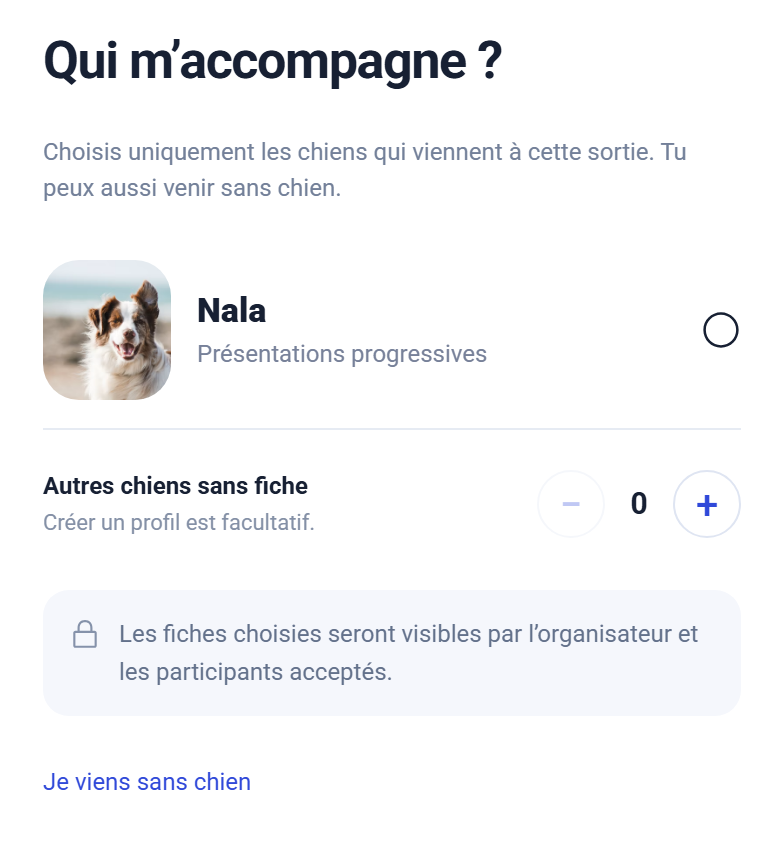
“I'm bringing my dog” lets you choose who joins you at this session. You can also enter a number of dogs without creating a profile.
The group sees the dogs announced by the organiser and accepted participants. Pending requests remain separate.
The declaration is specific to each outing. A saved companion does not automatically come with you.Introduce your dog.
Without sharing everything.
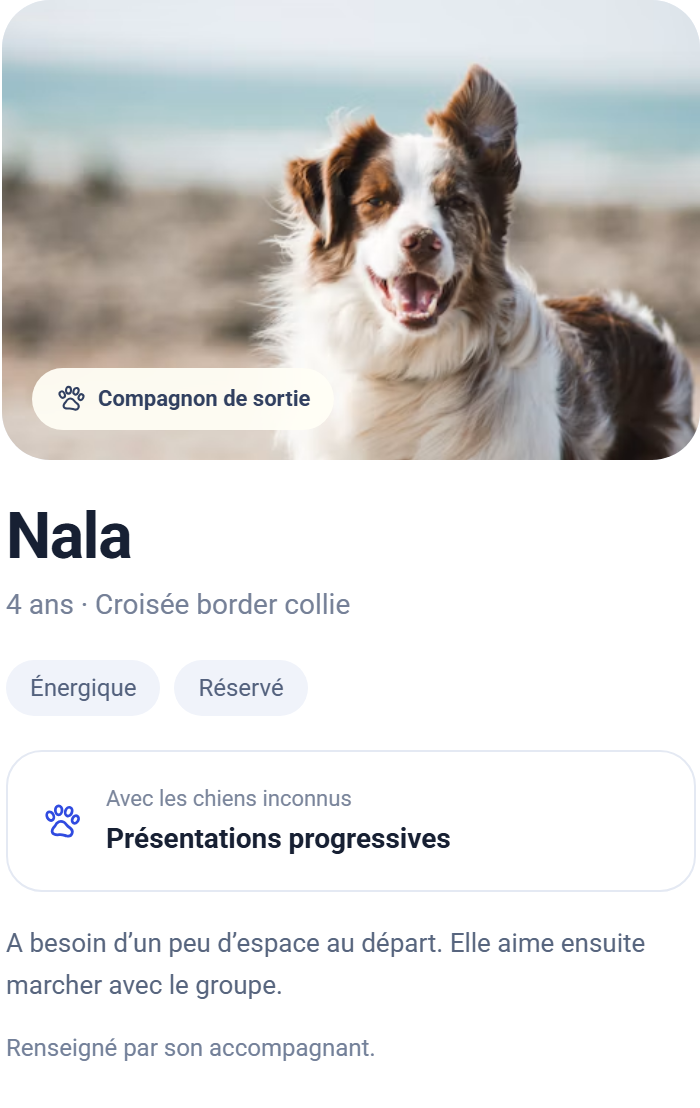
Under “Edit my profile” → “My outing companions”, an optional profile introduces your dog. A name is enough; the photo and other details are up to you.
The profiles you select for a session are shared with the organiser and accepted participants. They stay private outside that sharing.
A few habits to help prepare the meeting, without promising dogs will get along.Features shown in the prototype. They are being prepared for a future app version; the screenshots show the French prototype interface, not an already released version.
Discover FoulevoTo explore further
Sources to open.
Ideas to explore.
Professional and institutional resources in French. Figures retain their date and reference population; none measures the results of a Foulevo outing.
Sources consulted on 15 October 2026 · General advice to adapt to people and dogs.